 Image 1 of 5
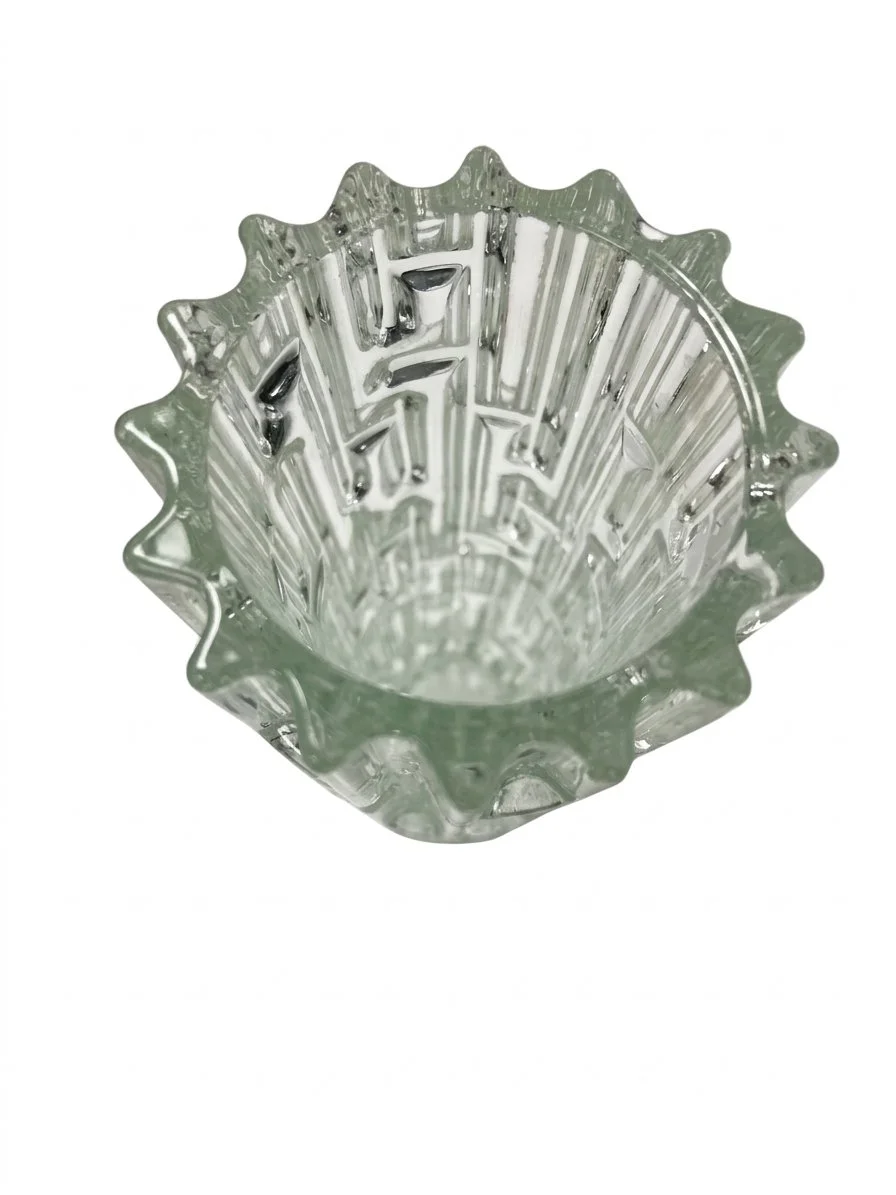 Image 2 of 5
 Image 3 of 5
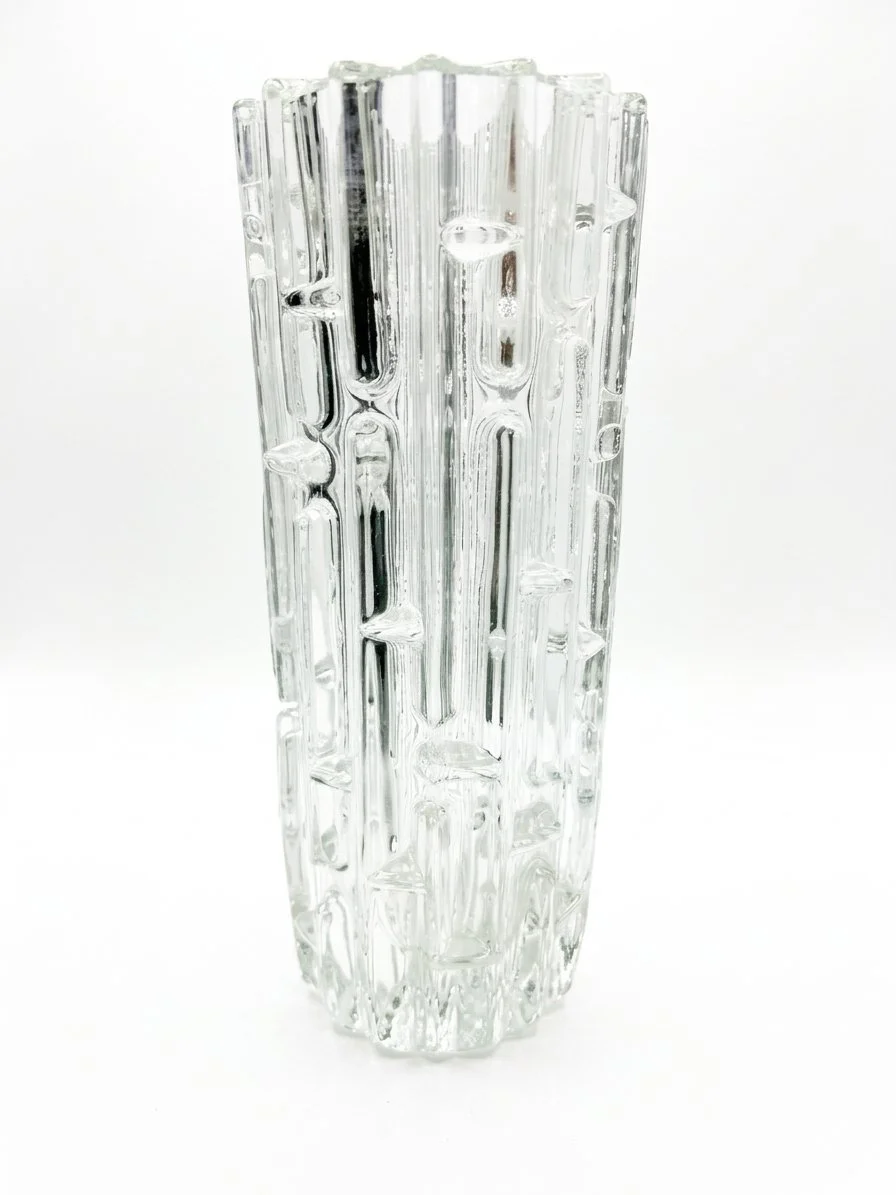 Image 4 of 5
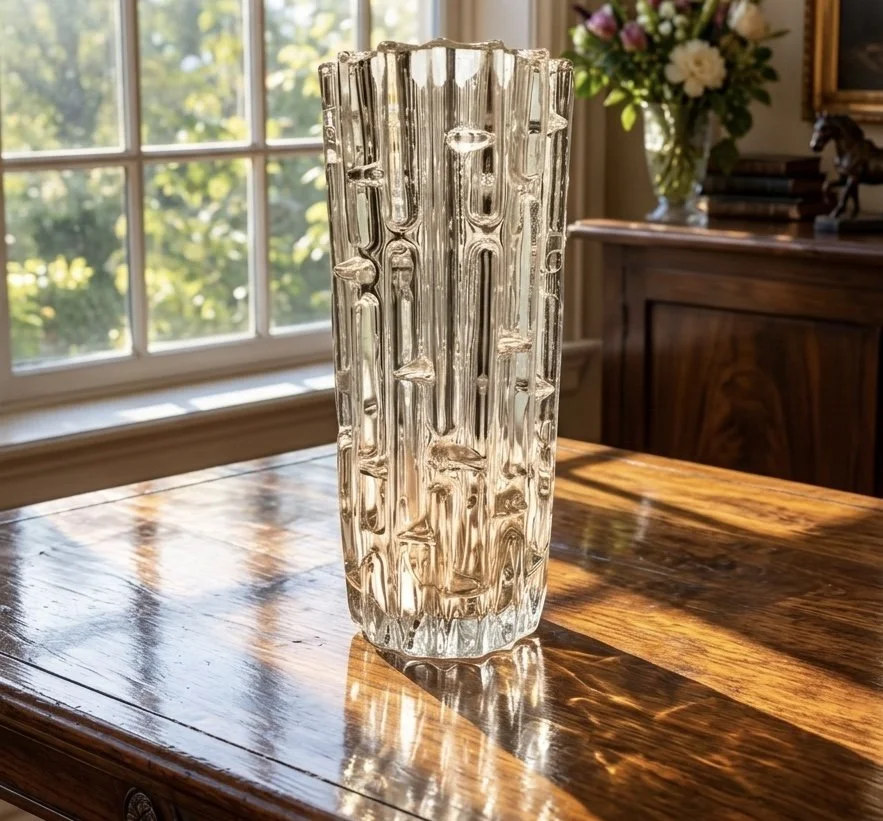 Image 5 of 5
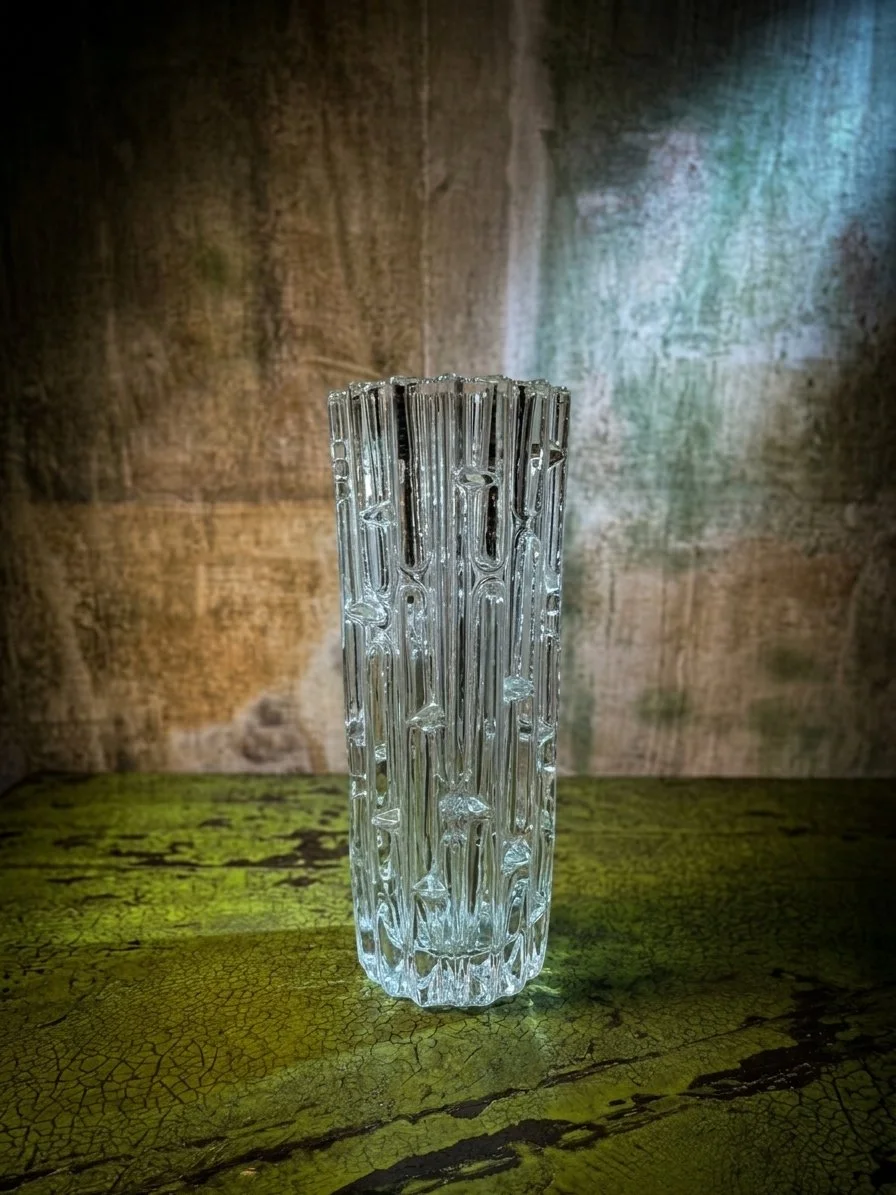
This striking cylindrical vase is a classic example of František Vízner’s early work for the state-run Sklo Union glassworks in Czechoslovakia. Before becoming one of the most celebrated studio glass sculptors of the late 20th century—with pieces now in the permanent collections of the Metropolitan Museum of Art and the Victoria & Albert Museum—Vízner spent his twenties as a salaried factory designer.
In the 1960s he transformed everyday pressed glass, long dismissed as a cheap imitation of cut crystal, into bold architectural sculpture. The deep vertical channels and raised horizontal tabs of the “Maze” (sometimes called Labyrinth or Tetris) pattern were engineered as prisms: as light moves across the thick soda-lime glass, the relief shifts and refracts, creating a kinetic optical effect. What was once mass-produced industrial glass becomes a light-bending object of quiet drama.
A highly collectible piece of mid-century Czech design that sits at the fascinating intersection of Communist-era industrial production and genuine fine-art sensibility.
Dimensions: 10” tall : 4” diameter