This commanding cabinet dates to the Qing Dynasty and reflects the robust furniture traditions of the northern frontier, including Mongolian regions under Qing rule. Its distinctive flared wing-top and richly worn cinnabar-red lacquer speak to a style valued across the empire for both practicality and auspicious presence—red being the colour of prosperity and celebration.
Hidden Well Storage: As seen in the interior photo, opening the small central doors reveals a deep, hollow lower compartment beneath a removable wooden shelf. Traditional rural Chinese cabinets were designed with these deep "wells" to store bulk staples like grain, rice, or dried goods, keeping them safe from pests while maintaining easy top-down access.
Splayed "A-Frame" Silhouette: The cabinet features an exaggerated, outward-flaring top with carved cloud-like flanges on the sides. In traditional Chinese furniture design, tapered or splayed silhouettes (yuanjiaogui) create a sense of architectural stability and visual grace, while the overhanging top surface doubles as a generous altar or display table.
Cinnabar Red Patina: The rich, distressed red finish is characteristic of traditional natural lacquer tinted with cinnabar or iron oxide. In Chinese and Mongolian culture, red symbolizes good fortune, joy, and protection, making red-lacquered chests prized heirlooms and popular wedding dowry pieces. Over decades of fluctuating humidity, the lacquer naturally crazes and wears away to expose the warm wood grain underneath.
Auspicious Door Pulls: The recessed wooden handles at the center of the small double doors are carved to resemble stylized Chinese characters—specifically evoking 門 (mén, meaning "door" or "gate") or traditional longevity symbols—serving as both functional pulls and subtle decorative talismans.
Dimensions: 55 1/4” wide: 18 1/2” deep: 62” tall
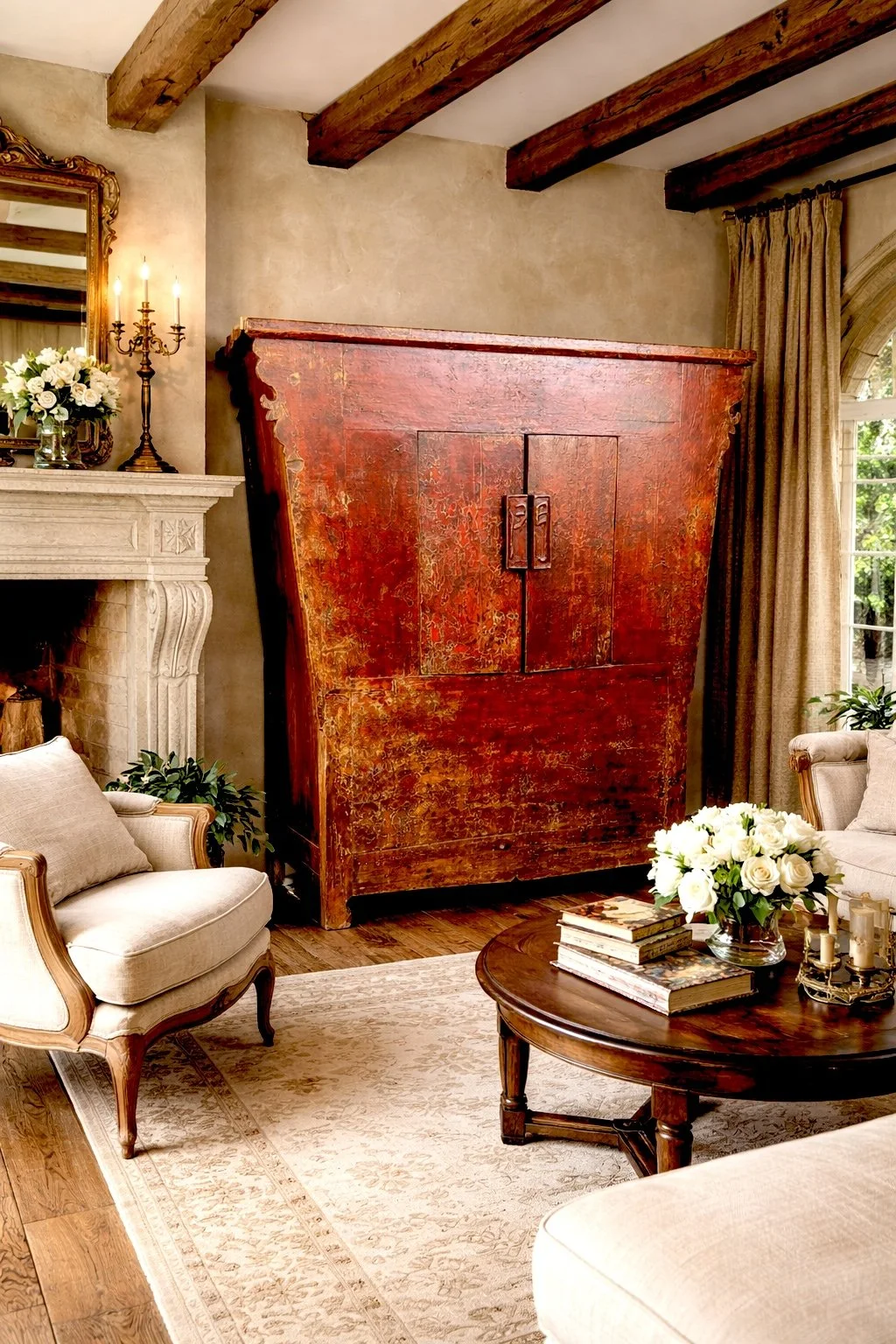 Image 1 of 8
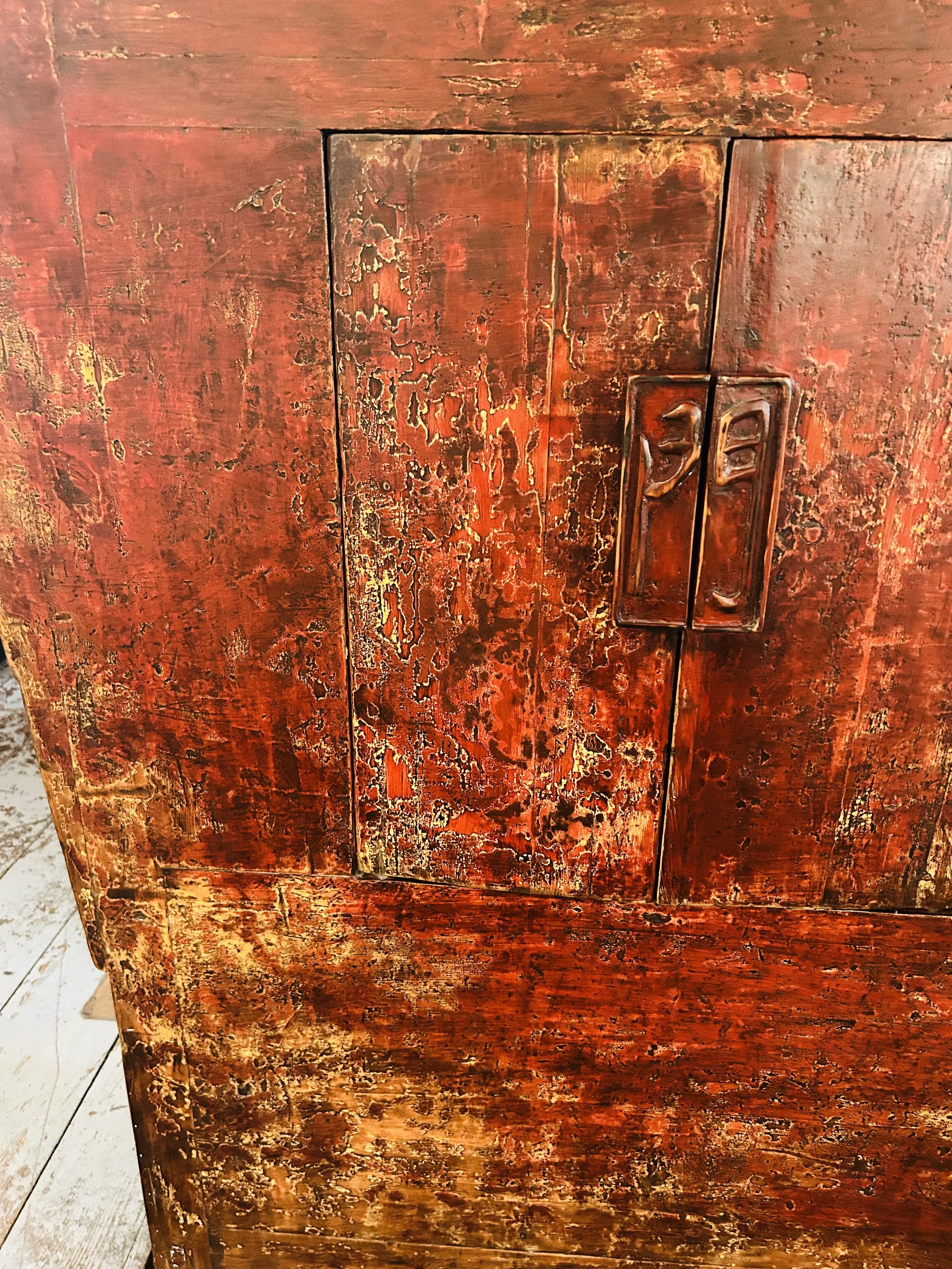 Image 2 of 8
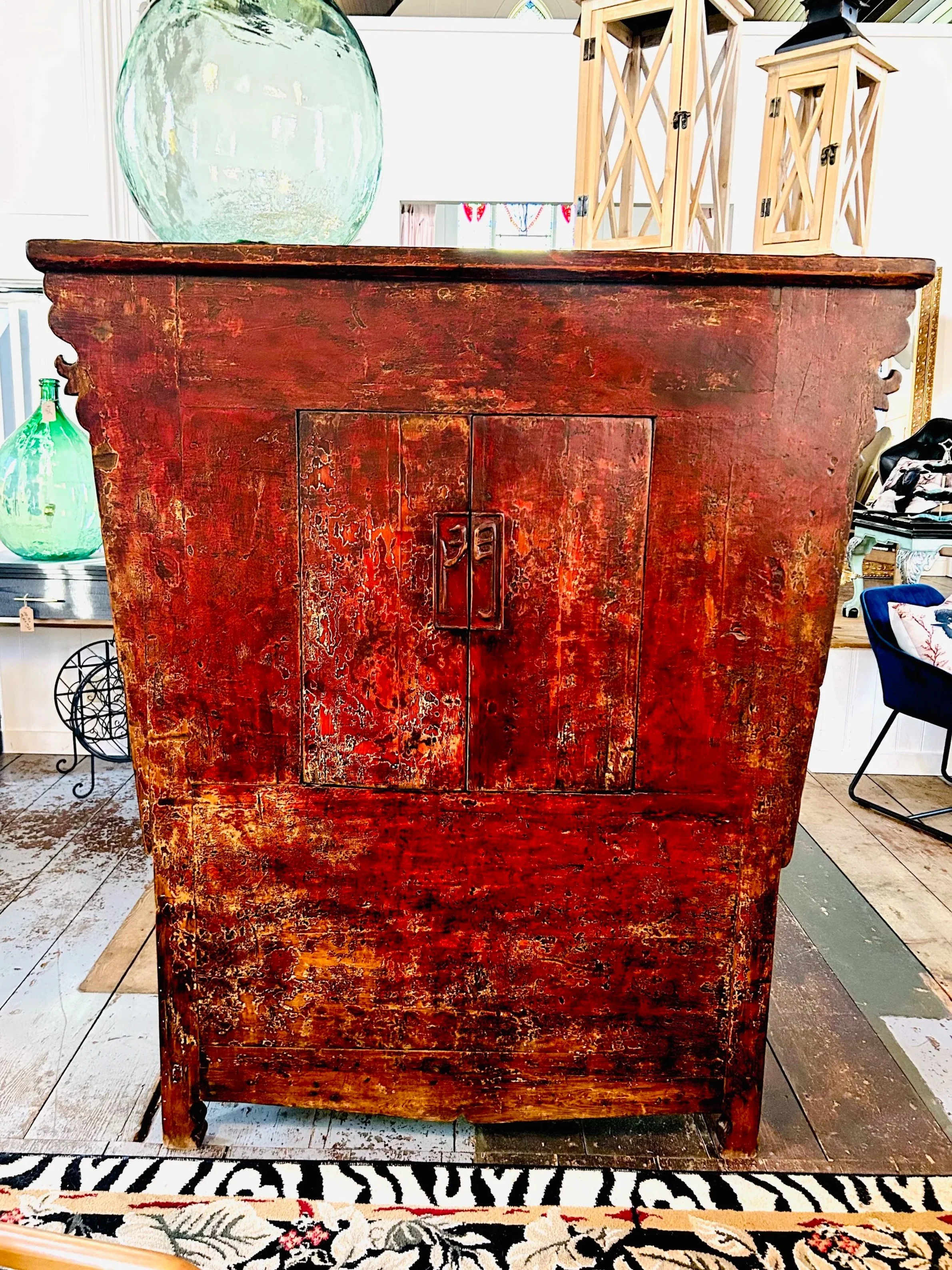 Image 3 of 8
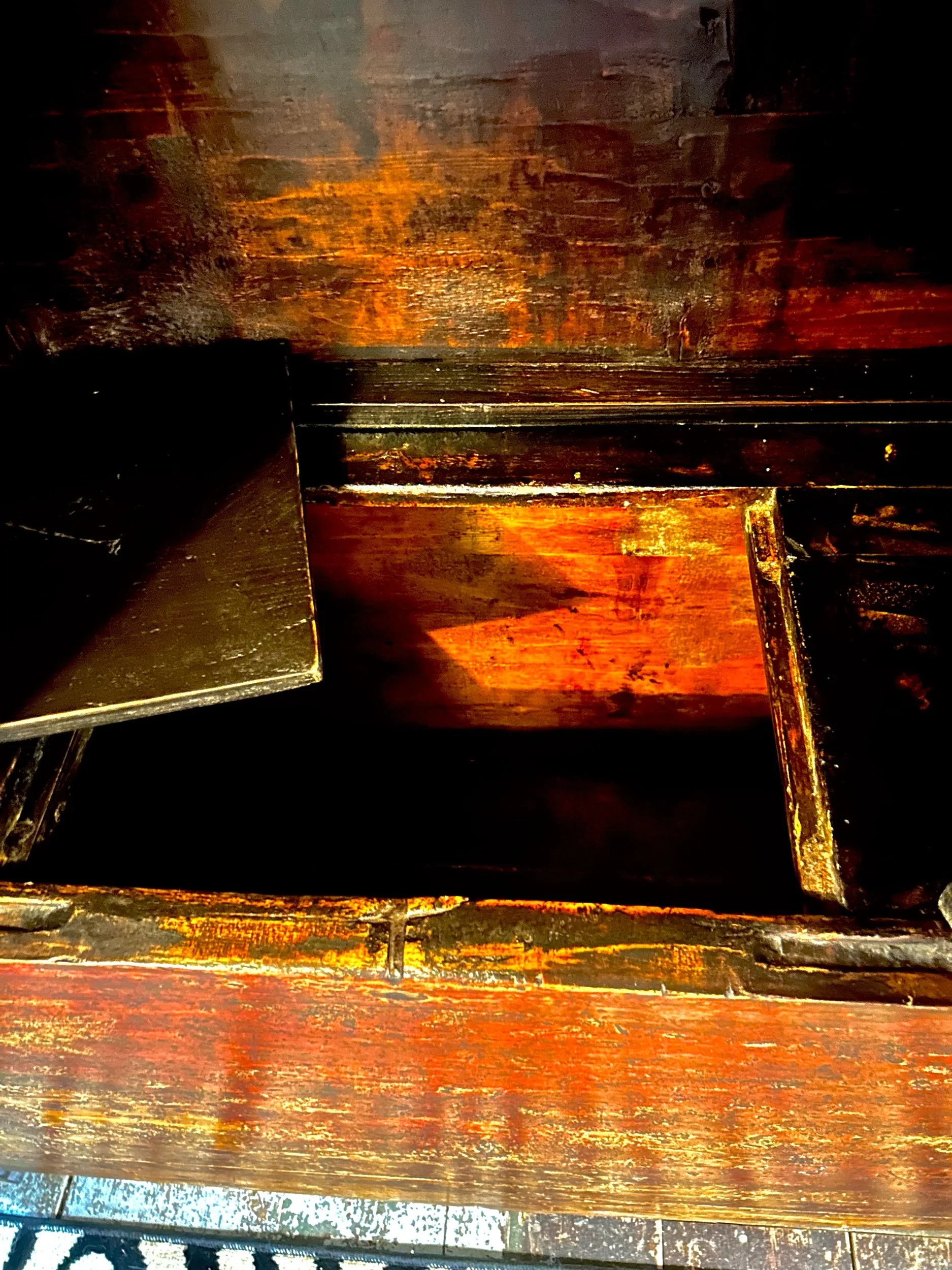 Image 4 of 8
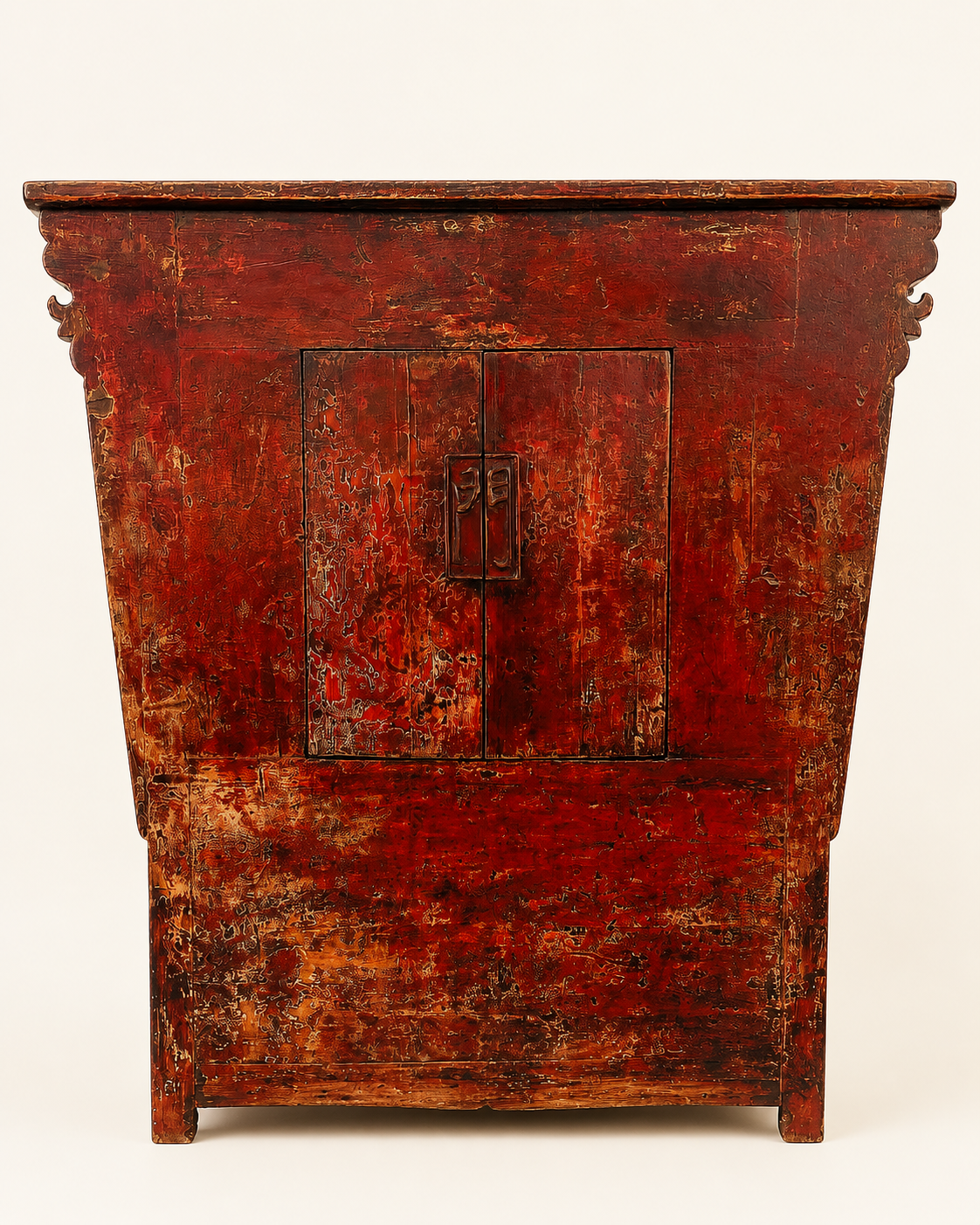 Image 5 of 8
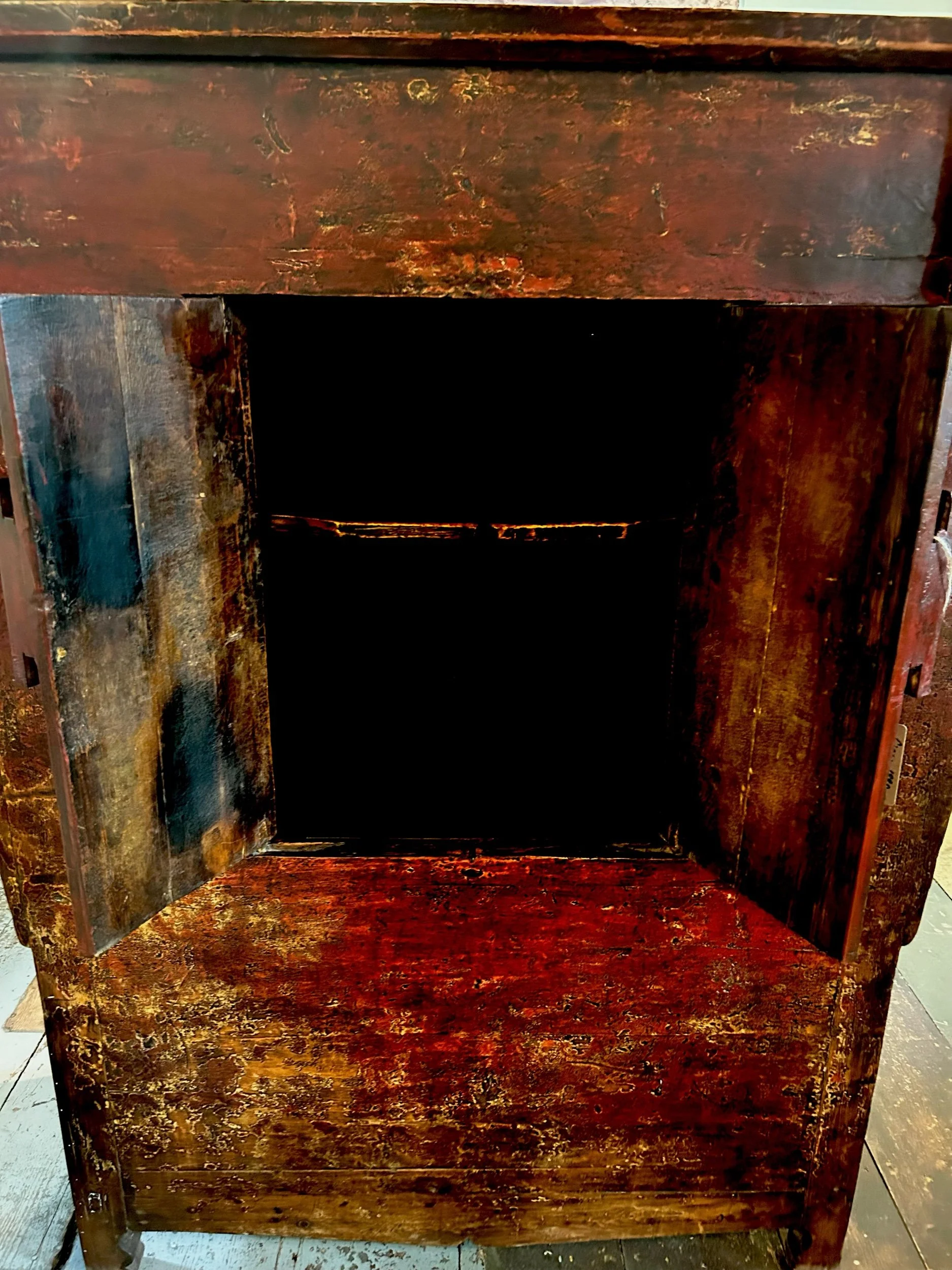 Image 6 of 8
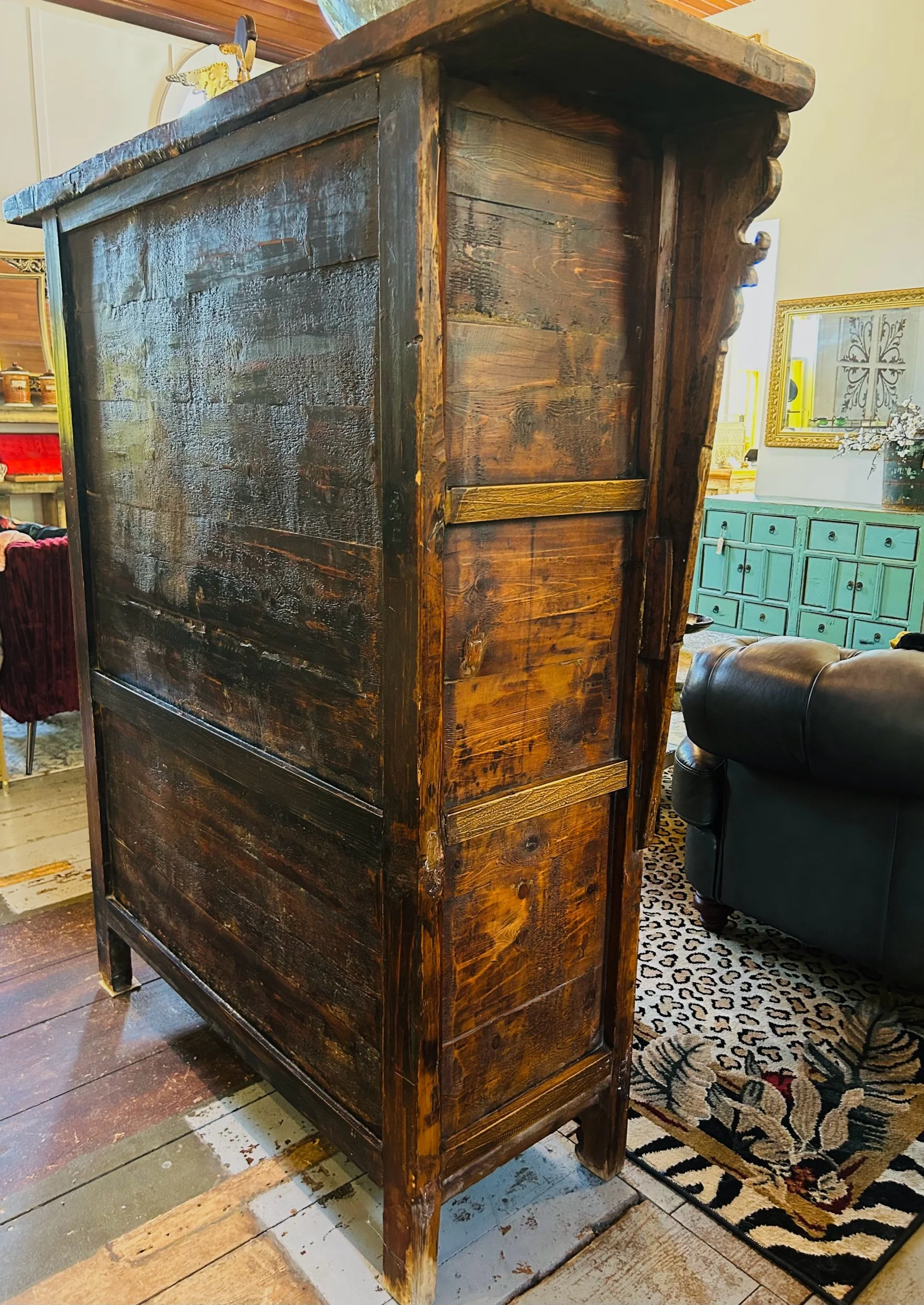 Image 7 of 8
 Image 8 of 8