Antique Art Nouveau hall tree (also known as a hall stand or hall seat) dating to the early 20th century (circa 1900–1915). Designed as an all-in-one entryway drop zone before built-in closets became standard in homes, it combines a mirror, coat hooks, seating, and hidden storage.
Key Design & Historical Highlights
Art Nouveau Silhouette. Unlike heavy, boxy Victorian furniture, this piece features the sweeping, organic "whiplash" curves typical of the Art Nouveau movement, seen in the flaring top corners, the pinched waist of the backrest, and the gracefully curved armrests.
Gilded Accent Carvings. The dark oak stained wood is contrasted with gold-gilt botanical carvings, including central acanthus leaves and radiating fan motifs at the upper corners.
Multi-Hook Brass Hardware. The cast brass hooks are designed with two distinct tiers. The long upper arms were shaped to hold wide-brimmed hats without crushing them, while the smaller lower hooks held coats, scarves, or heavy outer garments.
Hidden Boot Box. The seat features rear hinges that allow the lid to lift up, revealing abuilt-in storage compartment originally meant for stowing boots, galoshes, or winter accessories.
Beveled Glass Mirror. The central rectangular mirror features a classic beveled edge, a hallmark of quality turn-of-the-century craftsmanship designed to catch light and brighten dim entryways while allowing guests to check their appearance before entering the main parlour.
Dimensions:
27 1/2” wide (at chair arms) / 30” wide (at top of mirror) : 78” tall : 18” deep
Condition Notes:
Solid and structurally sound oak hall seat with intact lift-top storage compartment and original mirror showing light period silvering. The dark stained finish has honest age-related wear including rubbing and finish loss on the armrests, light scratches on high-touch surfaces, and expected edge wear, while the applied gilt mounts, coat hooks, and decorative medallions remain present with mild oxidation and gilt loss. Overall a well-preserved example with attractive patina and no major structural issues.
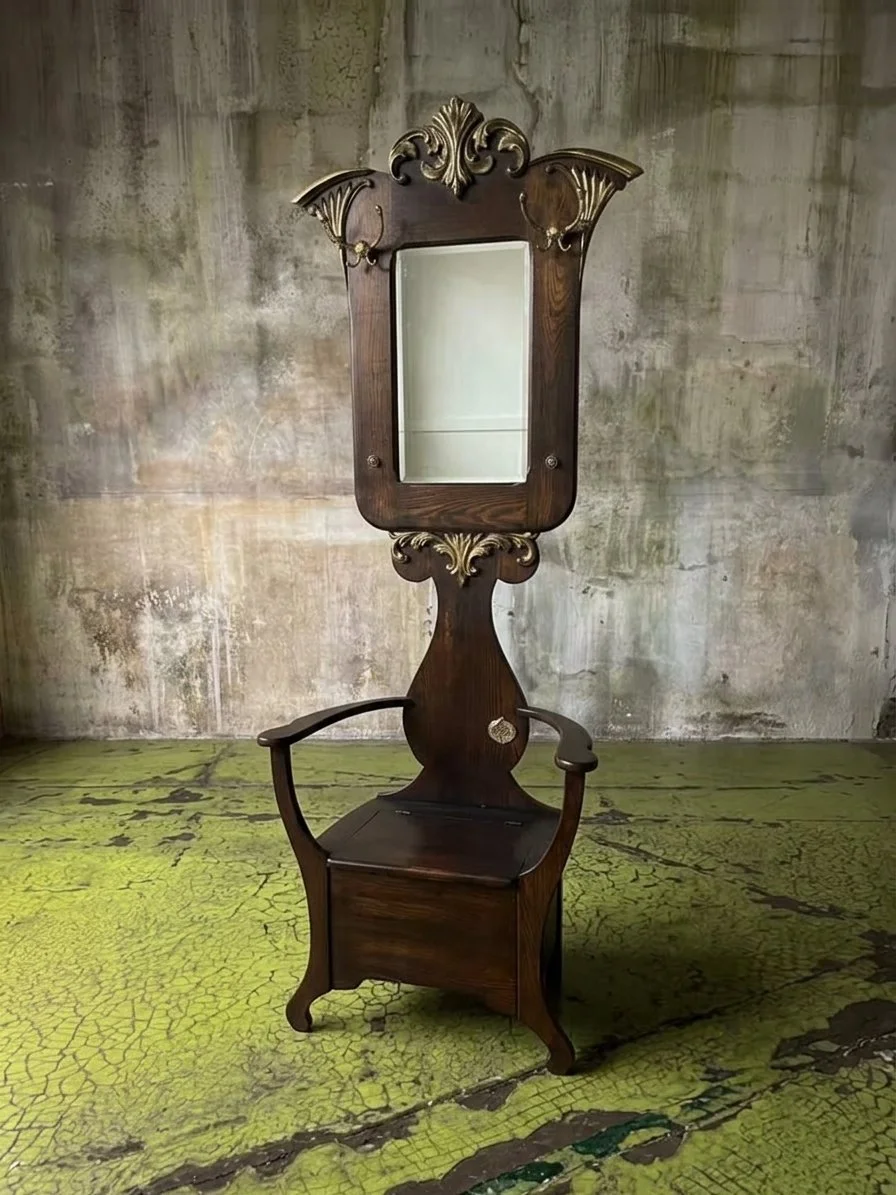 Image 1 of 8
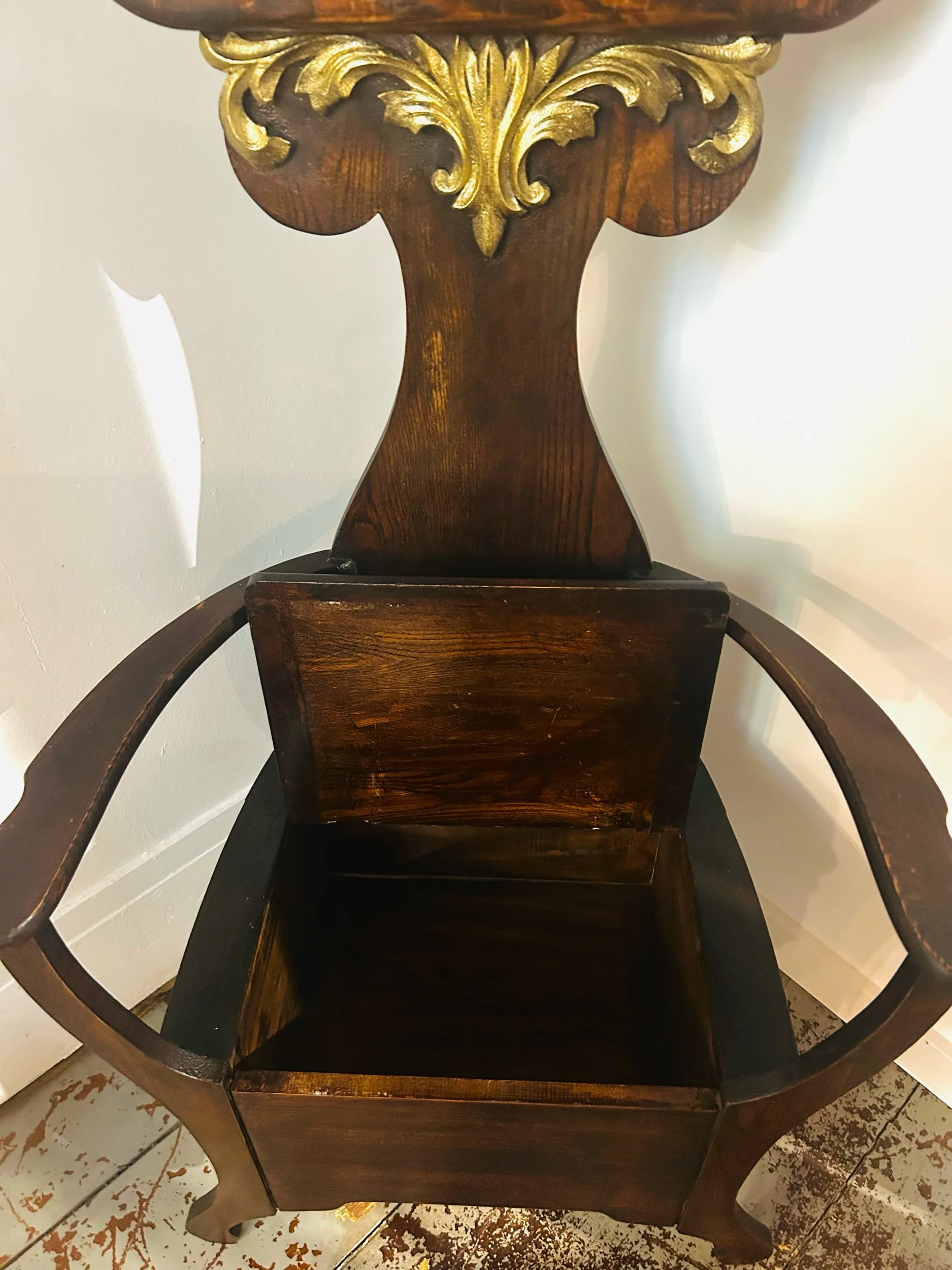 Image 2 of 8
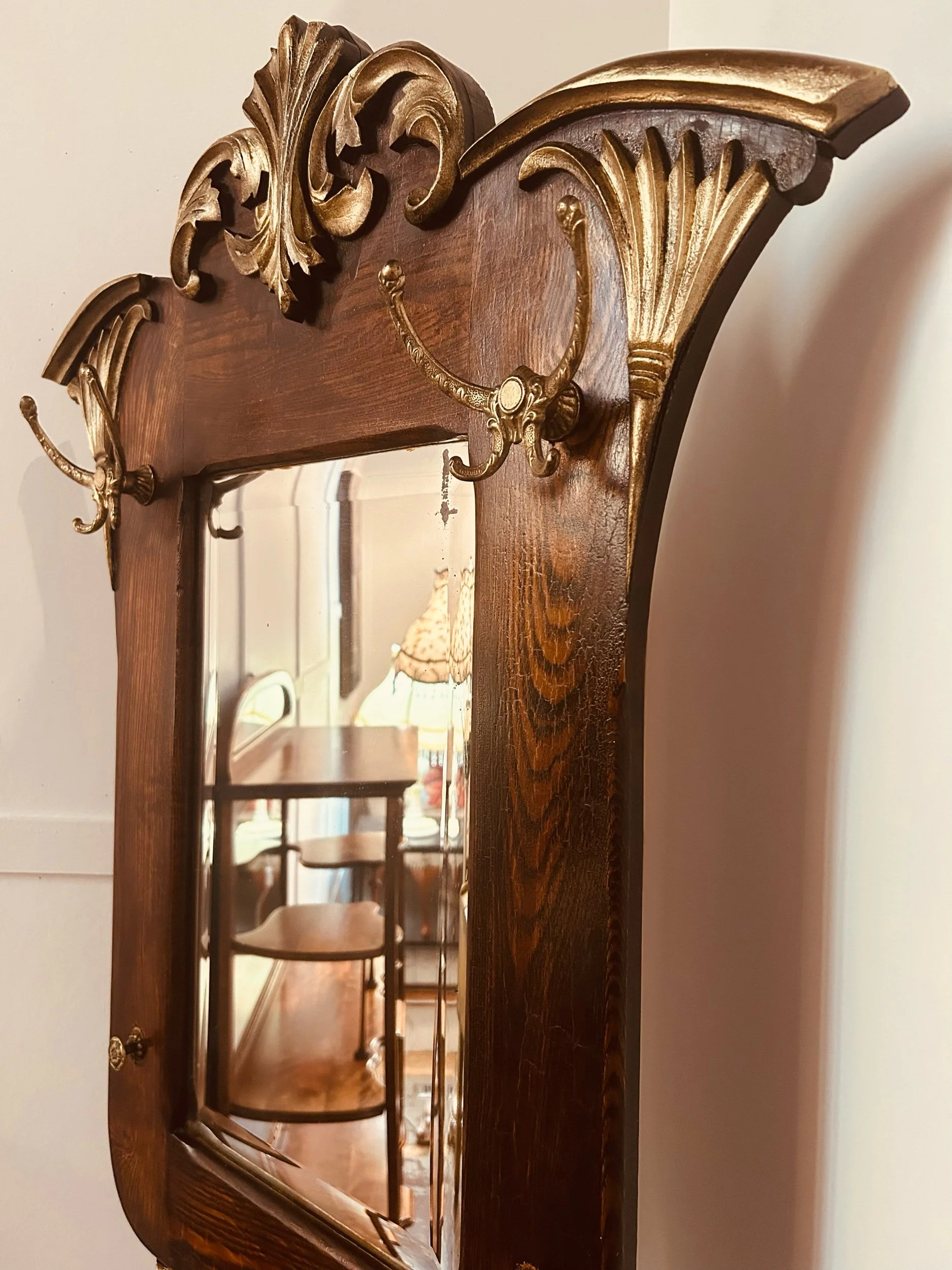 Image 3 of 8
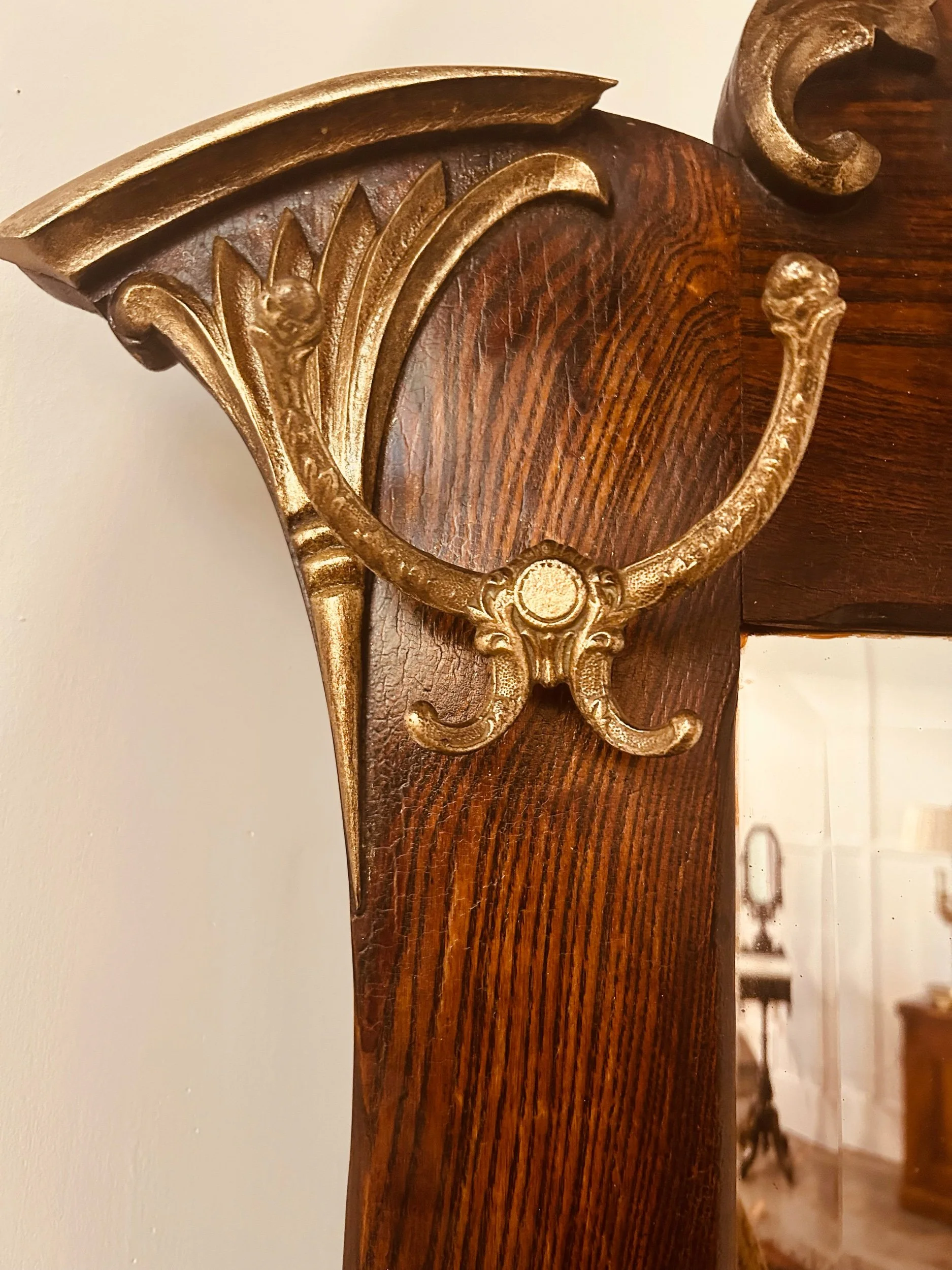 Image 4 of 8
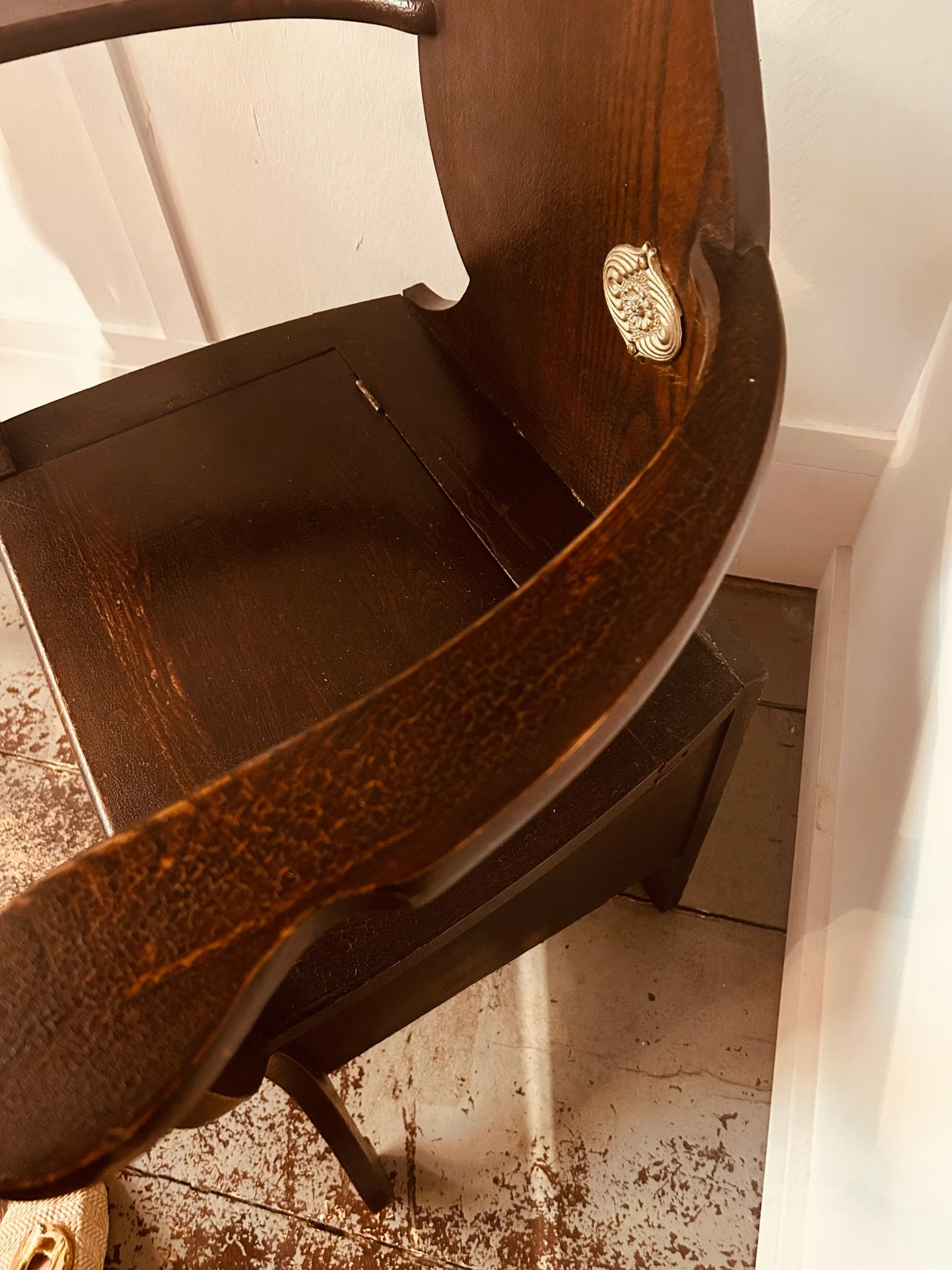 Image 5 of 8
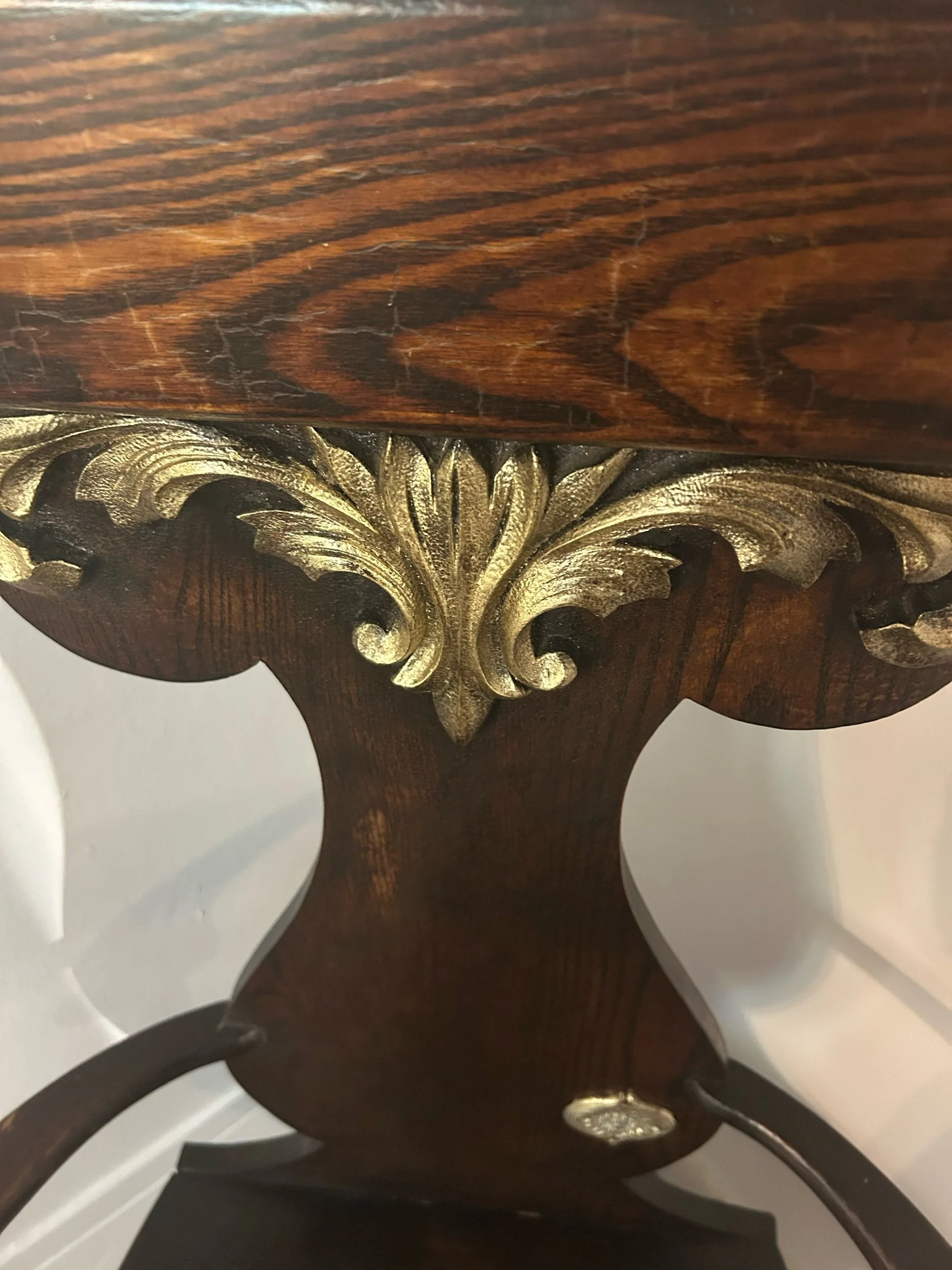 Image 6 of 8
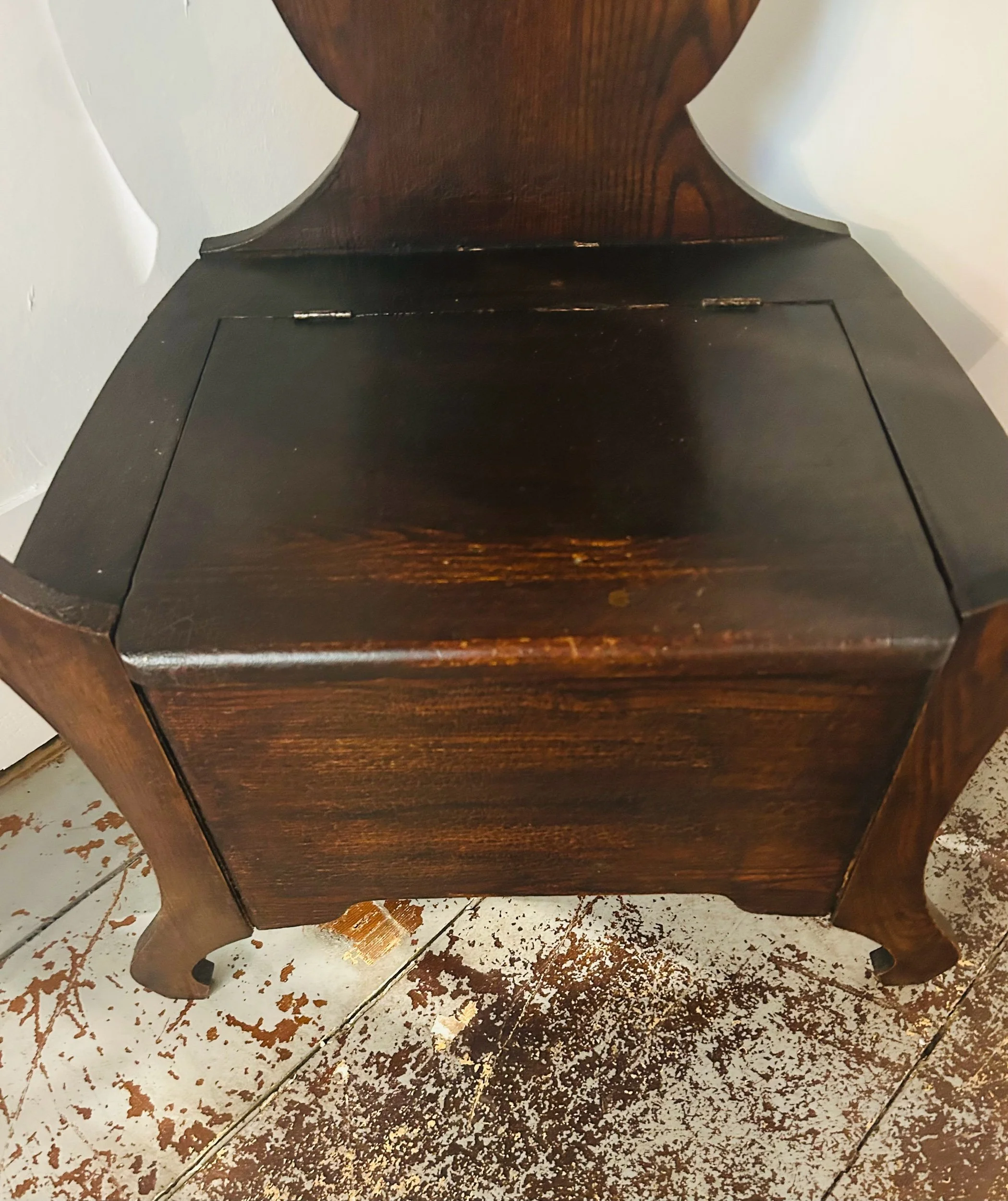 Image 7 of 8
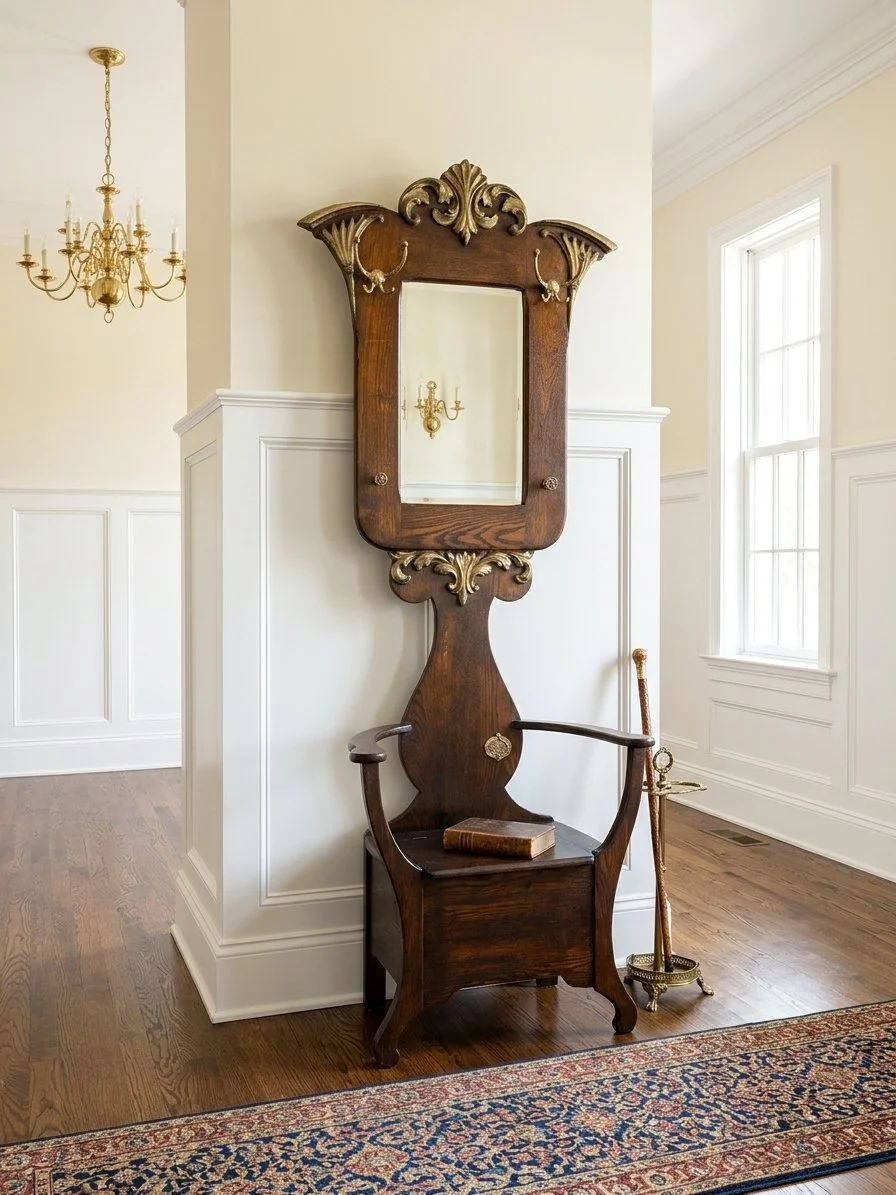 Image 8 of 8